Barry the Sea Bass
European Sea Bass · Dicentrarchus labrax
The classroom for this fish. Use the Trip Planner when you want a mark for today.
Where to Go
You don’t need a secret mark. Pick the right type of ground for the weather, then walk it at low tide so you know the rocks before they cover.
Open Catch Map — see where members are catching, then pin your own.
Storm beaches
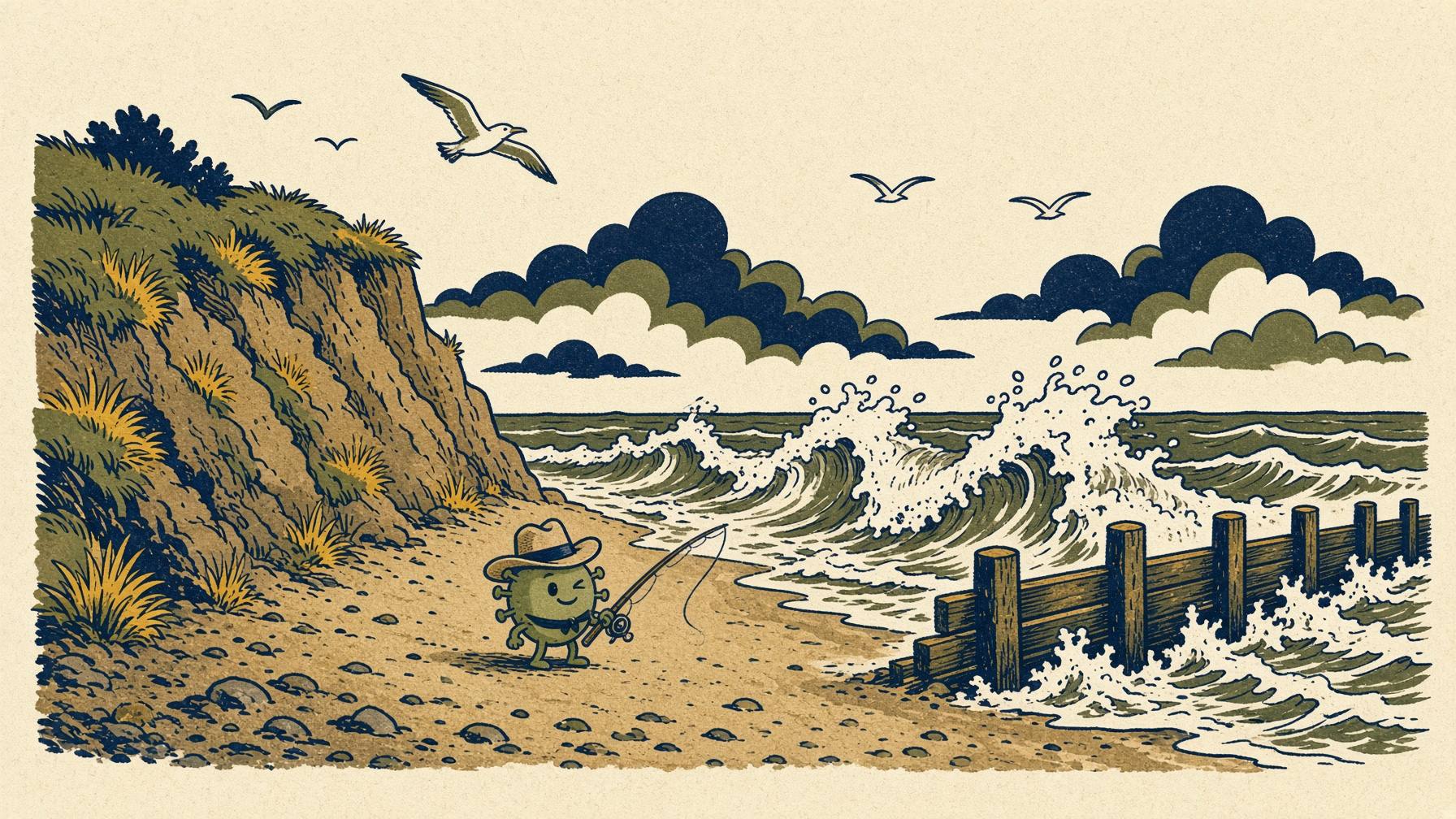
Open sand, dumpers, a bar. Try the flooding tide, onshore wind, coloured water. Stand where the white water is punching a hole, not in the dead flat. Surfing lure and metal. Last light if people have been on it all day.
Rocks and headlands
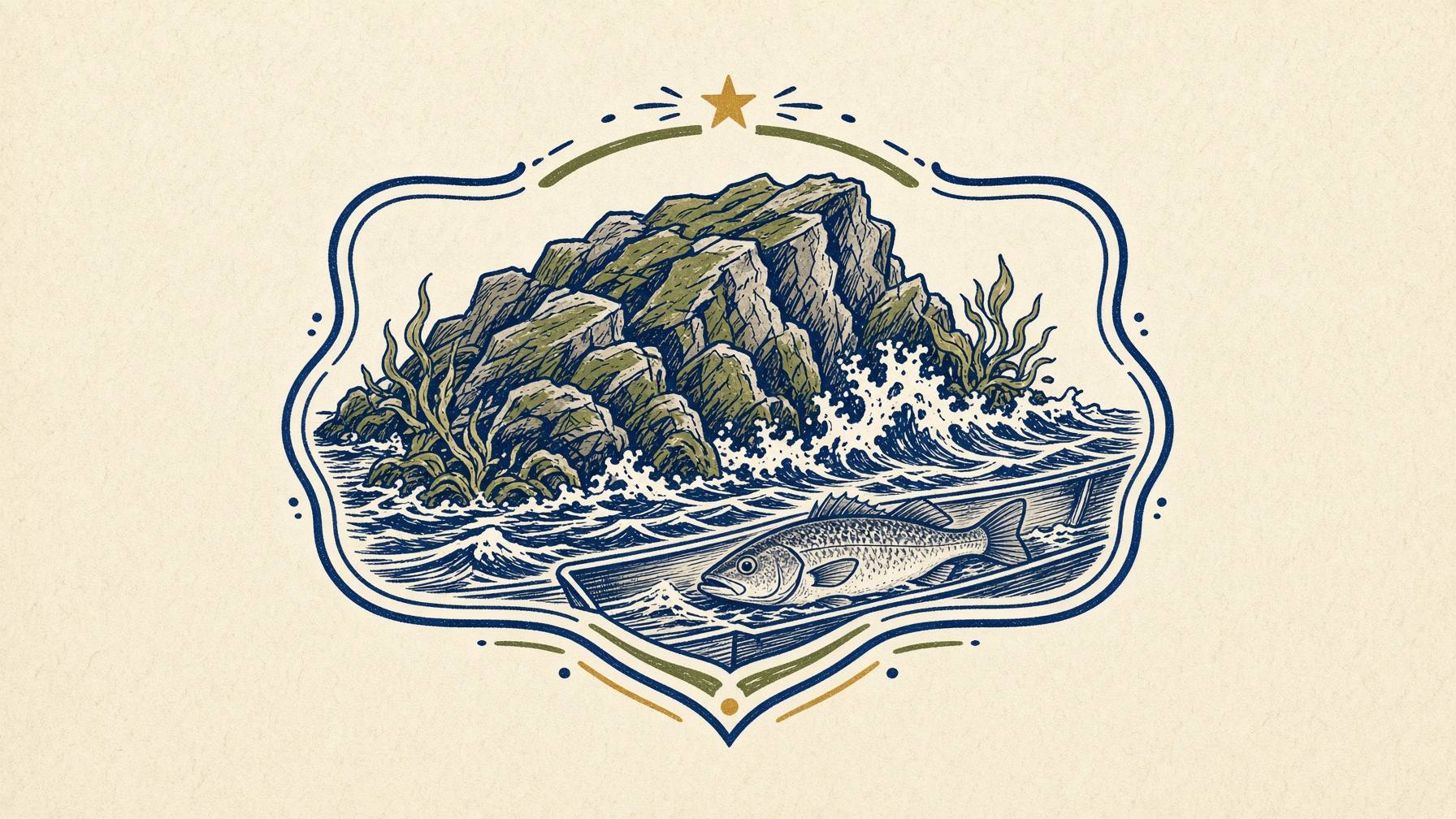
White water on the point, a gutter, kelp edges. High water ± two hours. Weedless through the wrack, deep diver off the drop-off, topwater in a calm pocket. Never turn your back on a swell.
Estuaries and harbour mouths
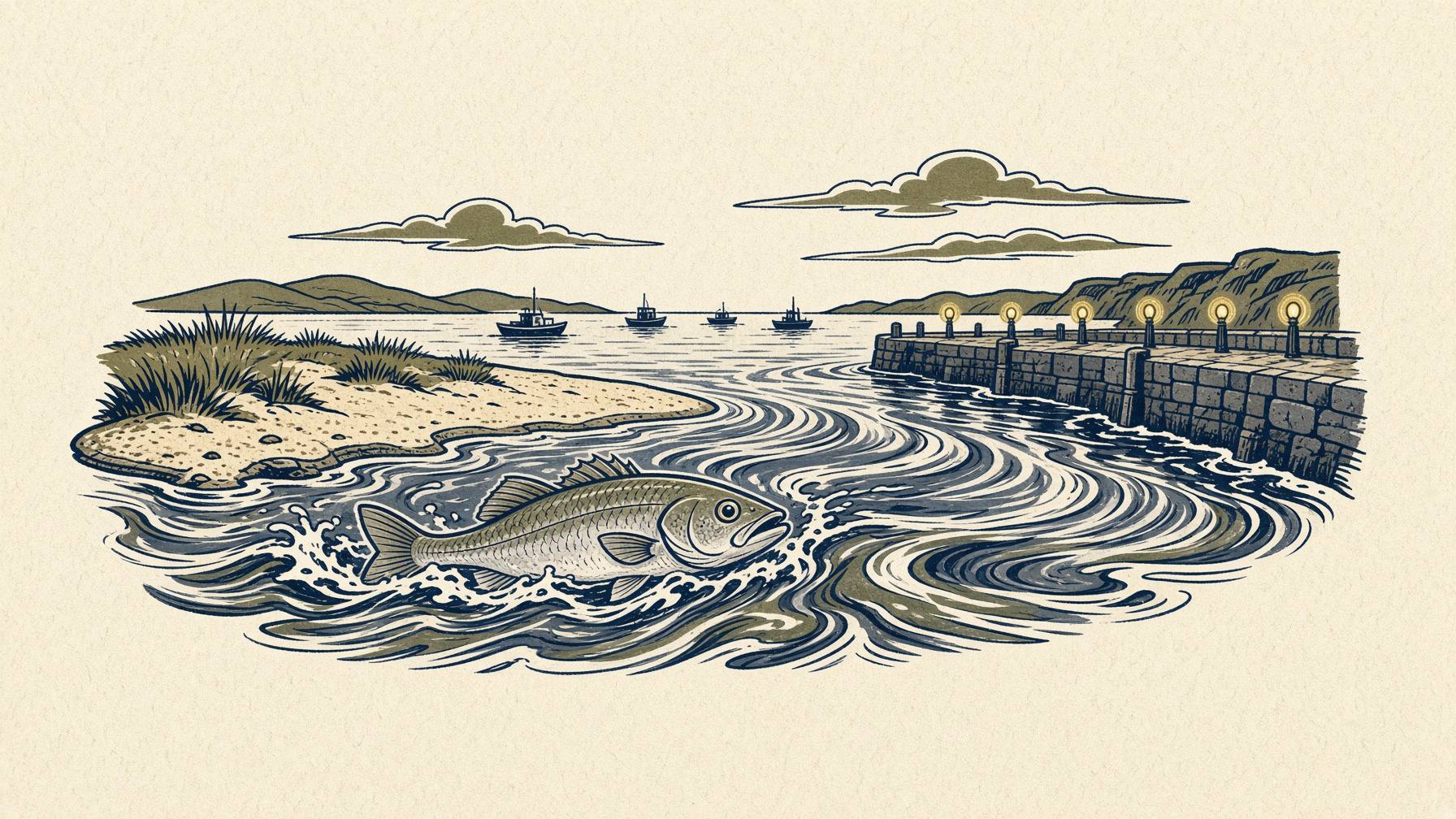
Bass sit where the current pinches — the first bend, a sandbar, lights at night. The last of the ebb and the first of the flood. Shallow diver and weedless. Watch boat traffic and local byelaws.
Piers, groynes, promenades
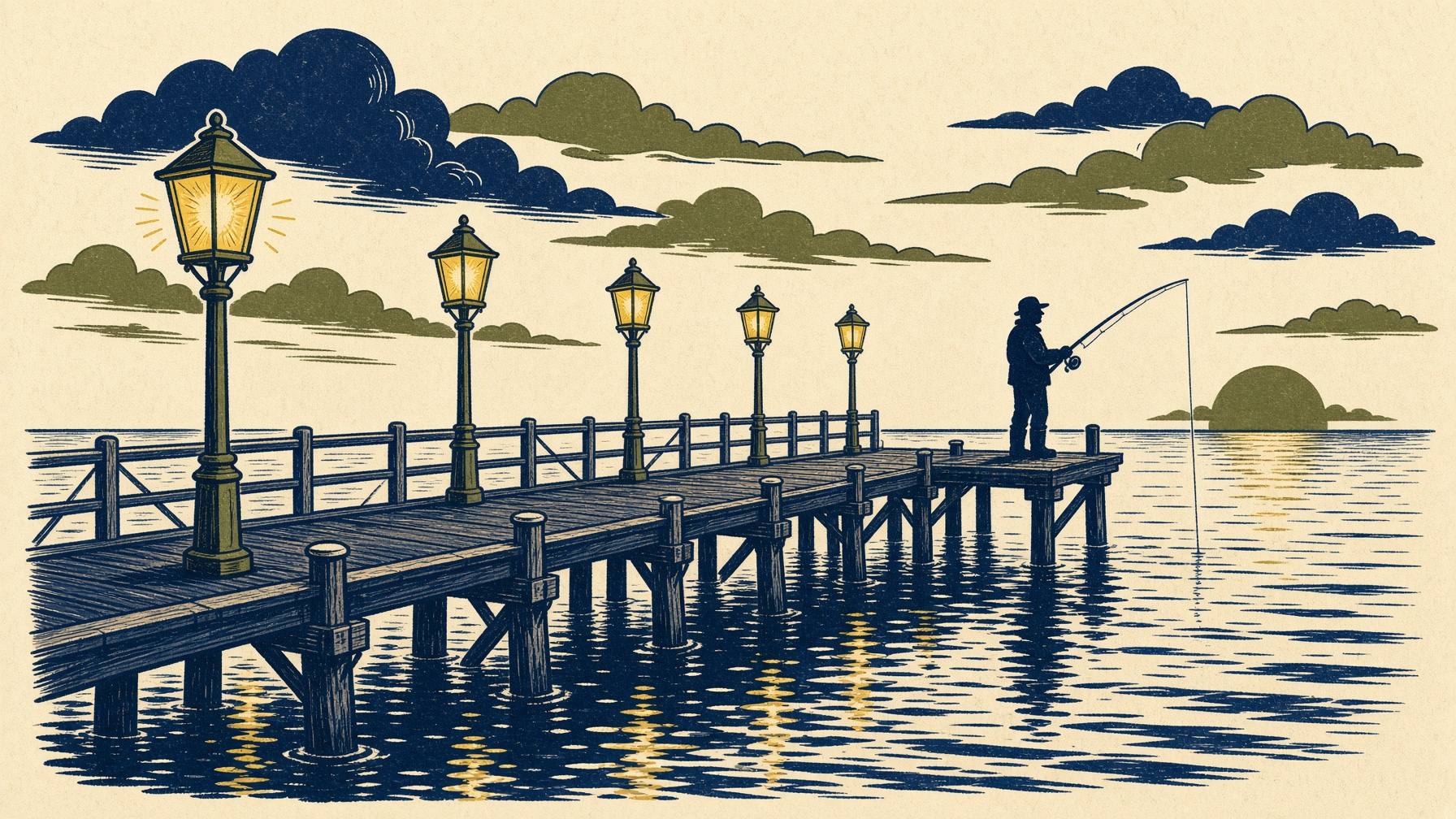
Easy access, pressured fish. Dawn, dusk, after dark under lights. Skip the crowded middle — fish the end, the uptide side, or the first hour after everyone leaves.
When to try a new mark
If the wind is wrong for your usual beach, drive to the one it hits. If it’s flat calm, leave the surf rod and walk rocks with a topwater. If it’s blown out, find the lee of a headland. Match the mark to the weather, not your favourite car park.
Grok
Ask about Barry
Where to Go. Ask how it works, what to buy, or what people get wrong.
Ask anything about this. A few places to start: