Barry the Sea Bass
European Sea Bass · Dicentrarchus labrax
The classroom for this fish. Use the Trip Planner when you want a mark for today.
When to Go
Check tide, wind and light before you leave. That’s what switches Barry on — not a lucky lure colour.
Tide
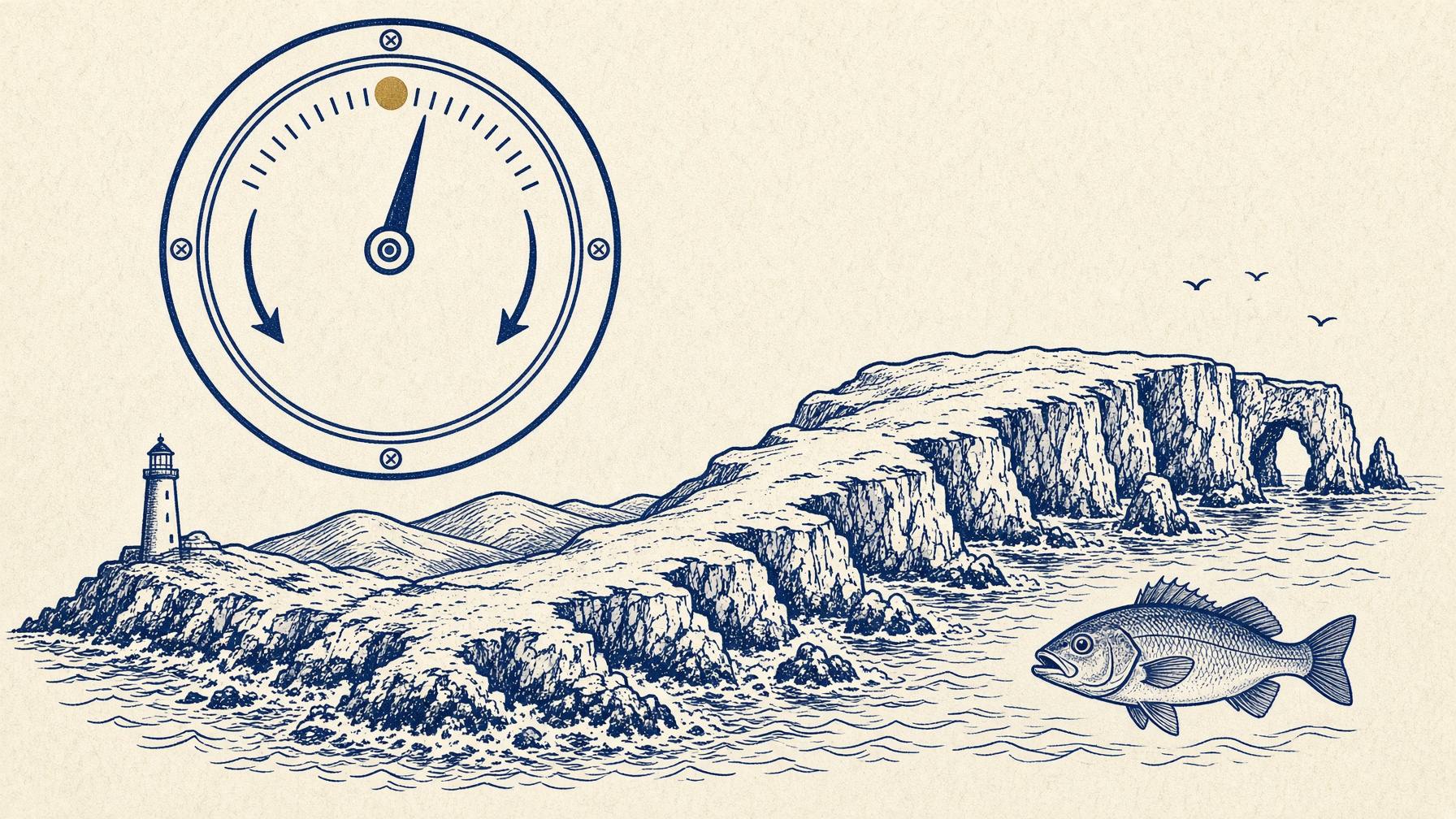
Work the moving water. Two hours either side of high is the default on rocks and headlands. Flooding tide onto a beach pushes bait into the wash. The last of the ebb can be gold in an estuary mouth as bait is pulled out. Slack water is usually a rest, not a session. Use Catch Map — it pulls max high water for the place you log.
Wind
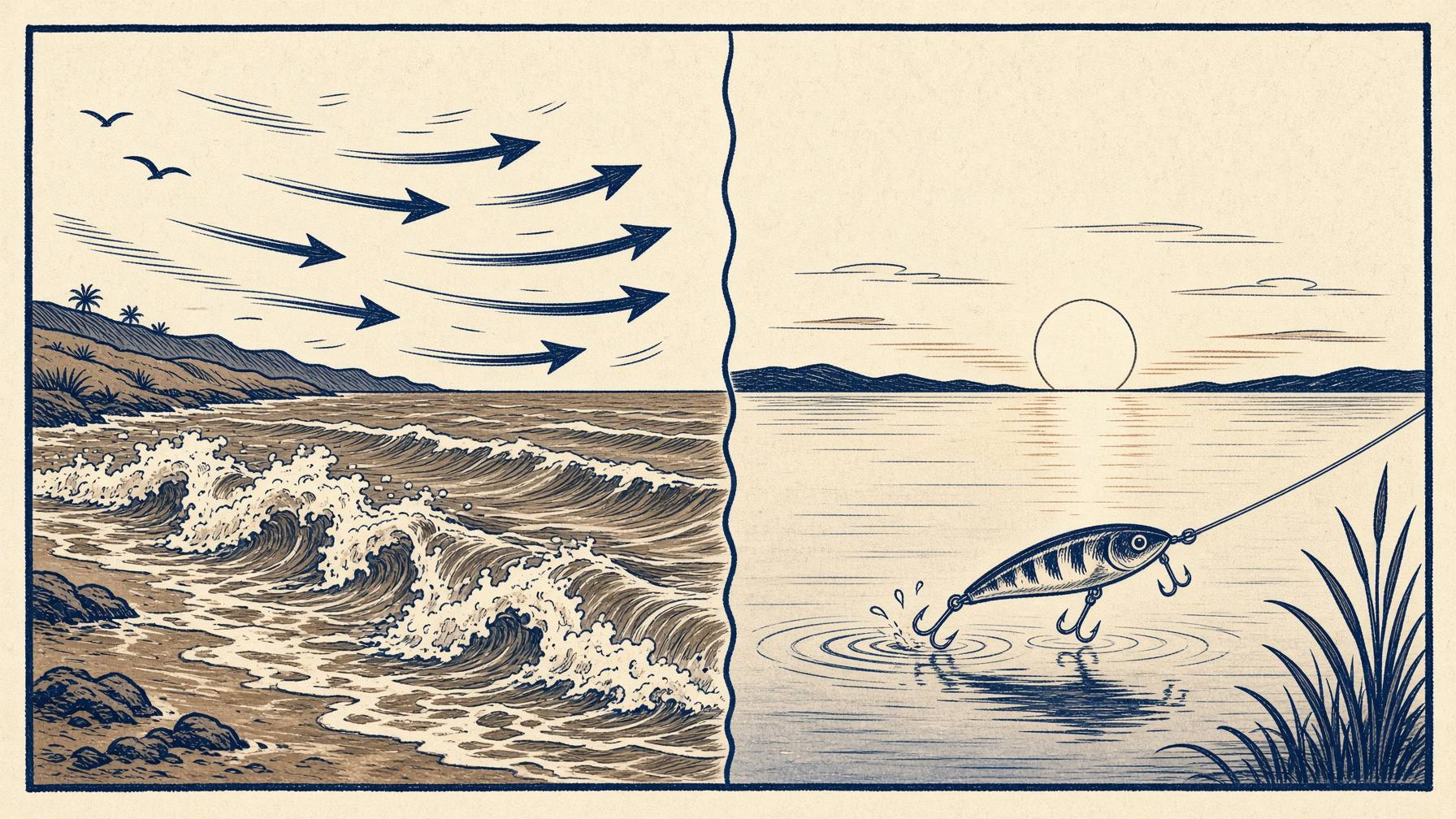
A moderate onshore (Force 3–5) puts colour in the sea and bass in the surf — that’s surfing and metal. Light offshore or a calm morning is topwater and shallow divers. A howling gale is a walk, not a cast. Direction matters more than a forecast emoji: a south-westerly on a west-facing beach is onshore.
Weather and time
First light and last light. Overcast beats high, hard sun. After a blow, when the sea is still coloured but dropping, is a classic window. Warm evenings in summer he hunts shallow. In a heatwave the first hour after dawn is worth more than noon.
The law on the calendar
1 February to 31 March is catch-and-release only for recreational bass in most English and Welsh waters. The rest of the year you may keep fish over 42 cm, currently up to three per angler per day. Nursery areas have extra rules. Always check GOV.UK bass guidance before you keep one — limits change.
Grok
Ask about Barry
When to Go. Ask how it works, what to buy, or what people get wrong.
Ask anything about this. A few places to start: